Critical essayAnna Kodl
Painting as a
Form of Thinking
Writing, perception and process in the work of Maxim Havlíček.
By Anna KodlAcademic advisor to the artist
“Mind prepares; heart executes. Logic studies; intuition paints.”
Havlíček’s practice moves from sustained intellectual preparation into an intuitive physical process. Anna Kodl’s study follows that movement through calligraphic structure, bodily trace, changing materials and the open fields of the recent paintings.
01
Painting as a form of thinking
What a painting accomplishes is not the same as what it shows. Havlíček’s early figures and objects are starting points for operations that dissolve, correct and reorganize them. Later paintings present process itself: sequences, stratifications and traces of decisions made on the surface. Months of research prepare each series; in execution, conscious planning recedes and the hand responds to what is already there. The painting is not simply the result of thought. It is the site where prepared thought takes material form.
02
Writing without language
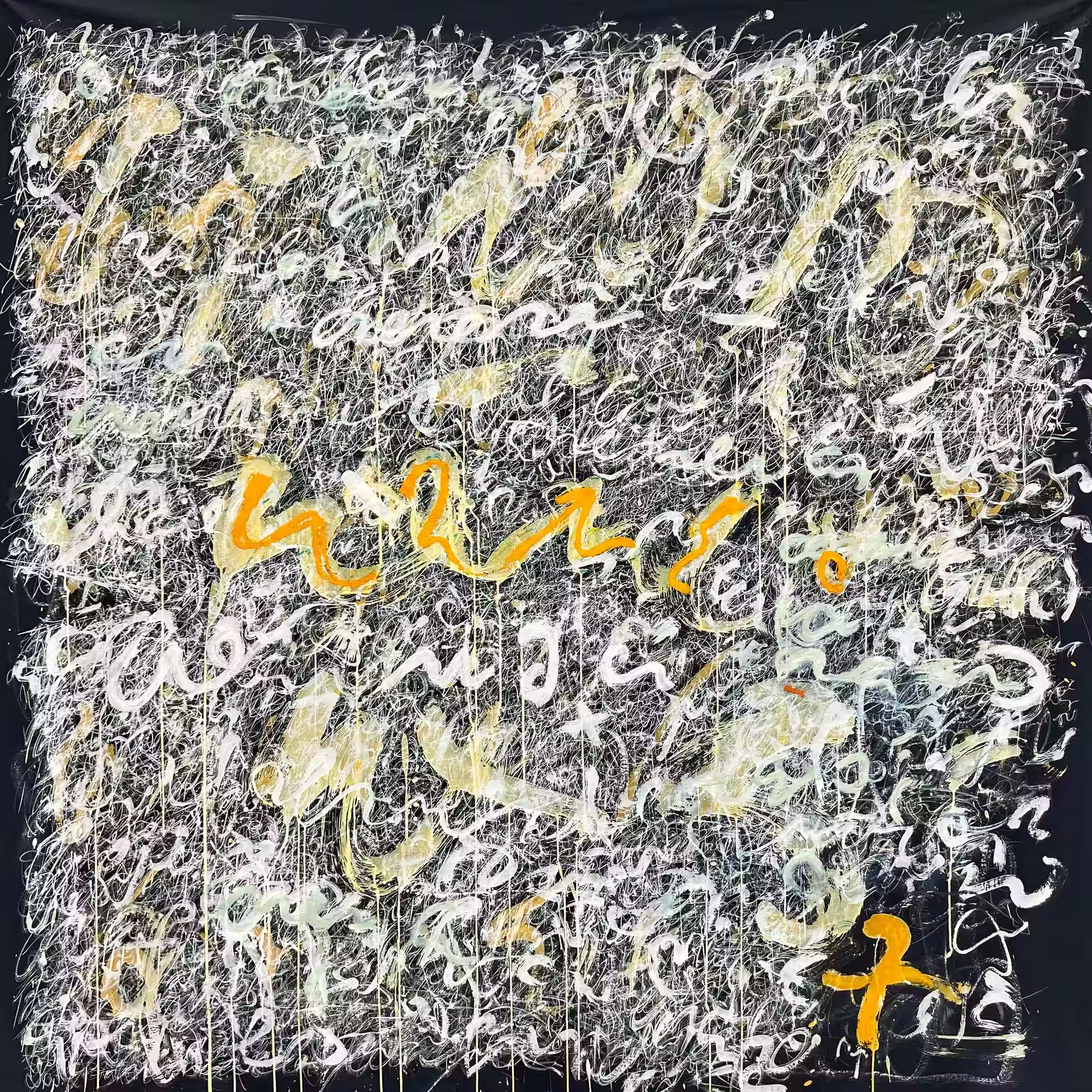
The writing in Havlíček’s paintings began legibly, then accelerated into abbreviations, symbols and a personal cipher. Czech and English overlap without resolving into either language. These marks are not encrypted messages to be deciphered. They are sequences that retain rhythm, pressure and the state of their making—a movement-recording in which each sign gains its function through relation to the next.
03
Time, body, trace
Time structures the sequence of interventions; the body performs them; the trace carries both forward. In dense later surfaces, individual marks can no longer be isolated, yet duration remains visible as overlay and texture. Even negation belongs to this logic. The destroyed Samurai paintings marked a structural decision: the figure could return only as shadow, absence or void, not as the stable center of the image.
04
The material turn
From 2020, material becomes an agent rather than a neutral support. Velvet absorbs light. Soft pigments emerge or disappear under changing illumination. Gold reflects movement and creates physical shadow. Works such as Ab Initio, Parallel Universes and Resurrection therefore exist in more than one perceptual state. Viewing becomes temporal and embodied; the image changes as the body changes position.
05
Personality without narrative
The paintings rarely narrate autobiography directly, but they remain unmistakably personal. Personality appears as a way of working: recurring condensations, reactive lines, overlays and procedures that persist even as materials change. What repeats is not a motif but a method. The signature lies in how a structure develops.
06
The open field
In The Last Missing Piece and Anima Mundi, writing becomes all-over and hierarchy gives way to a field of connected traces. The canvas ends; the field does not. Each work appears as one section of an energy that could continue beyond the frame, where temporary order arises within constant transformation. The field is not a conclusion, but a working condition that carries the history of its making within it.
This editorial presentation has been adapted for the web from Anna Kodl’s longer academic texts, “Painting as a Form of Thinking” and “Maxim Havlicek: Bridging Calligraphy and Abstraction in Contemporary Art.”